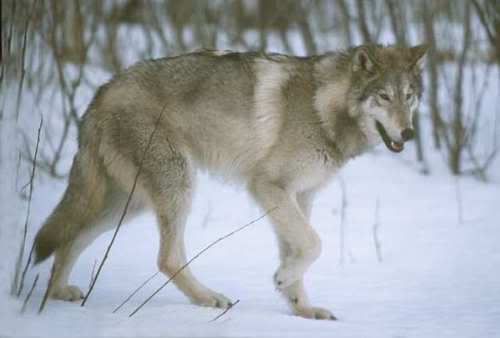
 You would think that we would have learned from past disastrous attempts to try to manipulate Mother Nature.
Alaska has now begun wolf killings to boost caribou for hunters.
The Alaska Department of Fish and Game, aiming to boost the survival of caribou calves, wants to kill up to 328 wolves, leaving behind 88 to 103. Killing them, state officials say, will allow the Fortymile caribou herd, ravaged by three years of bad weather and heavy snow, to expand from its current level of 40,000 animals to as many as 100,000.
The predator control effort has run into opposition from the National Park Service who argues that there aren't nearly as many wolves as state officials estimate, and that killing so many could devastate the packs. Also, the park service says that the Fortymile herd hasn't approached 100,000 since the early 1900s.
Wolves in other parts of the West, meanwhile, are also about to come into the gun sights, after the Obama administration's decision this month to let stand the removal of endangered-species protections for wolves in the Upper Midwest, Idaho and Montana.
SourceHere are a few lessons we should have learned from history:* It is believed that the Sahara Desert has been formed due to the disruption of a food chain. Records point out that in ancient times the Romans captured lions, which resulted in the sharp reduction in the predator population. This in turn resulted in the increase in herbivore population since there was fewer lion to kill them. The increase in the herbivore population led to overgrazing which removed all vegetation. In this manner the Sahara Desert was formed.
* In 1935, a species of toad from Central America was introduced in Queensland (Australia). It was meant to eat beetles that were destroying the sugarcane crop. But not only did the toads eat the beetles, they also ate many other useful and harmless creatures. They ate lizards which help farmers by feeding on insects and also destroyed small frogs which are harmless to crops. Since the toad had no natural predators they multiplied into huge populations which are now destroying the native Australian wild life.
* In Europe, during the middle ages, the cat was considered a symbol of evil. Superstitious people associated the cat with witchcraft and the devil. For this reason, hundreds of thousands of cats were killed. The absence of cats led to a huge increase in the rat population of Europe and contributed to the spread of Bubonic plague. This disease which is transmitted to people by rat fleas killed about a fourth of the people who lived in Europe during the 1300’s.
* Rabbits are not native to Australia. In 1859, 24 wild rabbits were released for hunting purposes. The effect of rabbits on the ecology of Australia has been devastating since this time. Rabbits are suspected of being the most significant known factor in species loss in Australia. Rabbits often kill young trees by destroying their bark. Rabbits are also responsible for serious erosion problems because they eat native plants which leaves the topsoil exposed and vulnerable to sheet, gully and wind erosion.
* In 1960, the mayor of Chicago, Richard J Daley, presented Emperor Akihito (then Crown Prince) with a bluegill fish. It was hoped that the Japanese would learn to love bluegill for dinner as much as Chicagoans do. The emperor donated the fish to research centers, but many escaped to wipe out the royal bitterling and bring other native species to the brink of extinction. They have infested waterways across Japan, including the moat of the imperial palace in Tokyo.
*
The following attempt to "fix Nature" may be the saddest of them all:
Things began to go wrong on Macquarie Island, halfway between Australia and Antarctica, soon after it was discovered in 1810. The island's fur seals, elephant seals and penguins were killed for fur and blubber, but it was the rats and mice that jumped from the sealing ships that started the problem. Cats were quickly introduced to keep the rodents from precious food stores. Rabbits followed some 60 years later, as part of a tradition to leave the animals on islands to give shipwrecked sailors something to eat.
Given easy prey, cats feasted on the hapless rabbits and feline numbers quickly grew. The island then lost two endemic flightless birds, a rail and a parakeet. Meanwhile, the rabbits bred rapidly and nibbled the island's precious vegetation.
By the 1970s, some 130,000 rabbits were causing so much damage that the notorious disease myxomatosis was introduced to Macquarie, which took the rabbit population down to under 20,000 within a decade.
The vegetation began to recover, but what was good for the vegetation proved bad for the island's wildlife. With fewer rabbits around, the established cats turned instead to local burrowing birds. By 1985, conservationists deemed it necessary to shoot the cats.
The last cat was killed in 2000, but the conservationists were horrified to see rabbit populations soar. Myxomatosis failed to keep numbers down, and the newly strong rabbit population quickly reversed decades of vegetation recovery. In 2006, the resurgent rabbits were even blamed for a massive landslip that wiped out much of an important penguin colony.
Scientists say the chain of events at Macquarie is an example of a "trophic cascade", the knock-on effects of changes in one species abundance. The next stage could be an "ecosystem meltdown".
The Tasmanian Parks and Wildlife Service
intends to fix the island once and for all, and has drawn up plans to eradicate all 130,000 rabbits, along with the estimated 36,000 rats and 103,000 mice that live there.
When WILL we learn?
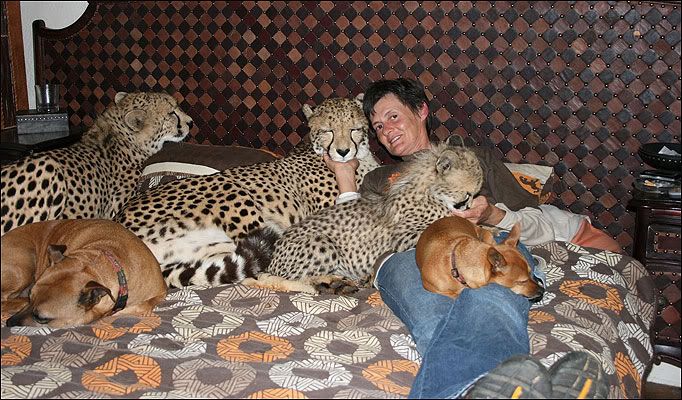 Meet Riana van Nieuwenhuizen. She lives in Bloemfontein, South Africa, on a farm with four cheetahs, a jaguar, a lion, and a couple of dogs.
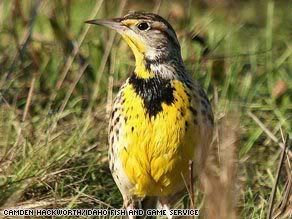 Just as they were when Rachel Carson published 'Silent Spring' nearly 50 years ago, birds today are a bellwether of the health of land, water and ecosystems.
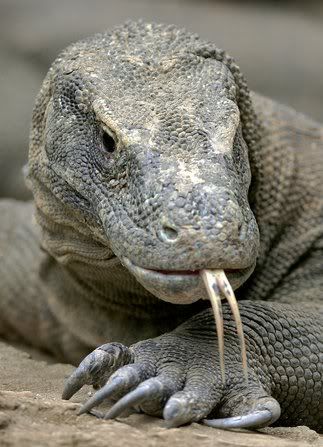 An Indonesian fisherman has been killed by Komodo dragons after he was attacked while trespassing on a remote island in search of fruit, officials said Tuesday.
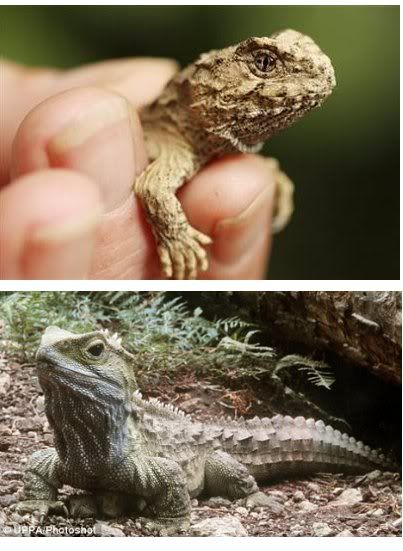 A hatchling of a rare reptile with lineage dating back to the dinosaur age has been found in the wild on the New Zealand mainland for the first time in about 200 years.
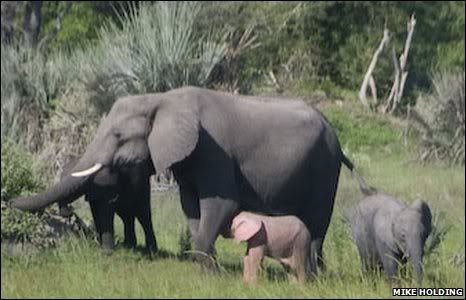 A wildlife cameraman took pictures of the calf when he spotted it among a herd of about 80 elephants in the Okavango Delta.