Showing posts with label history. Show all posts

Wednesday, April 8, 2009

Ancient Sea Water Trapped in Powell Lake

One of our favorite places in the world is Powell Lake, BC. We love it so much we have a home floating on it's surface, a float cabin. While seeking information about Powell Lake, we discovered the results of an oceanographic study conducted by the University of British Columbia in 1962 and 1972. Oceanographic?

Powell Lake is one of the deepest lakes in BC with a recorded depth of 1,180 feet. It was created when glaciers scoured out its fjord shaped basin. If you travel up any of the inlets along the British Columbia coast, they look virtually the same as Powell Lake. The difference is they are filled with ocean water. In the case of Powell Lake, after the glaciers retreated the surrounding land rose and sea water became trapped. Over the years, fresh water increased the depth of the lake, but did not mix completely with the heavier salt water at the bottom. At least, that was the hypothesis.

What was discovered at the bottom of Powell Lake in 1962 was the oldest, about 10,000 years, trapped sea water to date. The water started becoming salty at about 400 feet and at the deepest levels was found to contain methane and hydrogen sulphide, which gives it a distinctive rotten egg odor. It contained no oxygen or life other than possible bacteria. This information sparked our imagination.

First we tried to think of a way to built a deep water sample apparatus of our own. In the end, we went to a friend and borrowed a Kemmerer bottle designed for such a task. On October 21, 2006, Wayne and I conducted our own deep water drop (1,100 feet) in Powell Lake. We were so excited when we opened the Kemmerer bottle and discovered our own 10,000 year old water.
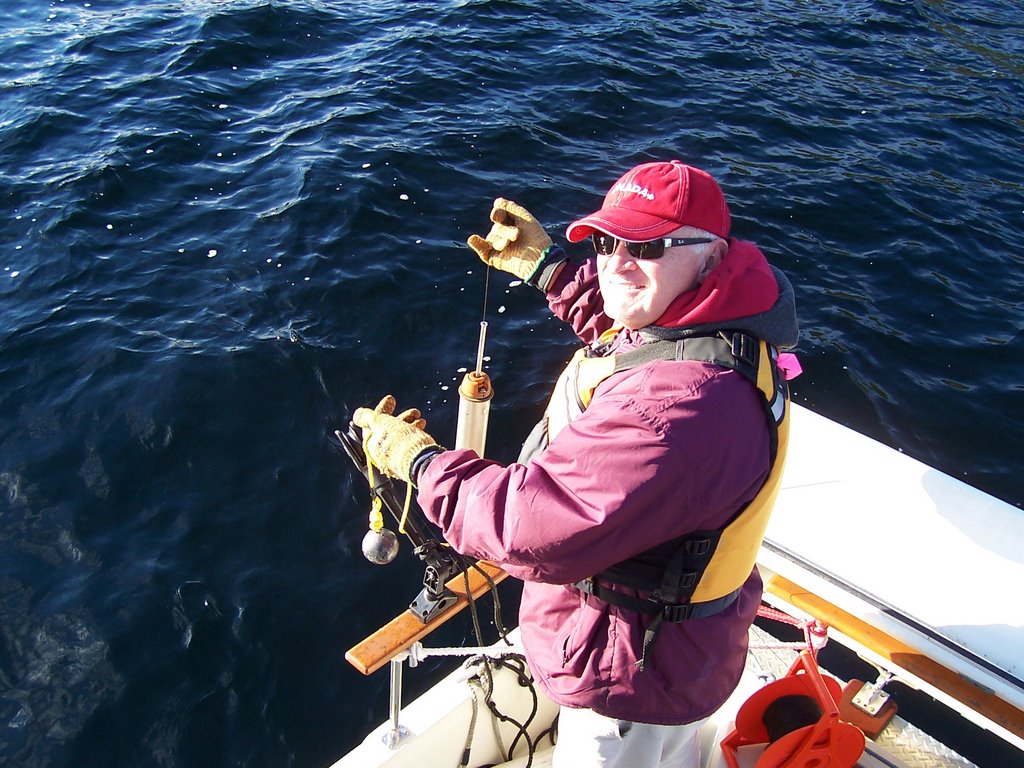
Yes, it was yellow and smelled of rotten eggs. We don't have the ability to conduct a chemical analysis, but a friend is helping with that as well. You just never know where your imagination can lead you. In our case, it led us back 10,000 years.

Want more information about the drop? Read Up the Strait, the newest book in the Coastal BC Stories series by Wayne J. Lutz. It is available at www.PowellRiverBooks.com. -- Margy

Friday, March 20, 2009

You learn something new every day

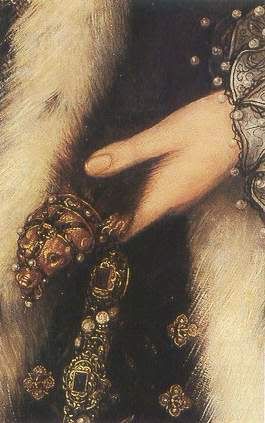
This is a Zibellini, or Flea Fur

Zibellinis were a popular accessory item for noble men & ladies during the 15th and 16th centuries. A zibellino, from the Italian word for "sable", is the pelt of a sable or marten worn draped at the neck or hanging at the waist, or carried in the hand. The plural is zibellini.

Some zibellini were fitted with faces and paws of goldsmith's work with jeweled eyes and pearl earrings, while unadorned furs were also fashionable.

The traditional costume historian's term for this accessory, flea-fur, is from the German Flohpelz, coined by Wendelin Boeheim in 1894, who was the first to suggest that the furs were intended to attract fleas away from the body of the wearer. There is no historical evidence to support this unlikely claim. Italians simply called these accessories "zibellini", their word for sables, and speakers of other languages called them "martens", "sables" or "ermines" in their native tongues.

Zibellini was the entire pelt of an animal, usually marten or sable, but also ermine and lynx were used, and was carried in the hand, over the shoulder or around the neck, and was suspended from a gold chain attached to a girdle. The head and feet of which were often bejewelled replacements for the animals original body parts. There are accounts of clocks being set into the heads. Gold and silver were the norm for the head and feet of the Zibellini, but crystal and jet were also used. Zibellini were further embellished with diamonds, rubies, pearls and enamel work.

The fashion for carrying zibellini died out in the first years of the 17th century, although fox-pelts were worn in similar fashion in the 19th and 20th century. [wiki]

(via Scribal Terror)

Tuesday, December 2, 2008

That's My World: The Hulks

Powell River in Coastal BC started as a company town for the Powell River Company. Brooks, Scanlon & Obrien joined forces to form the Powell River Company, western Canada's first pulp and paper mill.

Powell River was selected for the location because of the close proximity of huge timber resources and a rushing river to be harnessed for power. The mill was started in 1908 and the first roll of paper was produced in 1912.

The Hulks have been a common sight in Powell River since they were installed to form a protective floating breakwater for the mill's log pond in the late 1940's. They are all concrete ships originally built as transports for supplies in World Wars I and II. All ten are the last remaining representatives of their class of ships. The Peralta, holds the honor as THE last concrete ship remaining from World War I.

In 2002 the mill, then owned by Pacifica Papers, eliminated it's pulping operations, but decided to keep the Hulks. They were reconfigured to make the pond smaller for barges of wood chips waiting for their turn in the mill.

The waters off the Powell River coast are deep. It would be expensive, if not impossible, to build a traditional breakwater around the area. The concrete ships sit low in the water, thus providing protection from heavy wave action, even during storms. Huge concrete anchors and massive chains hold the ships in place. Occasionally, however, they must be reset due to the corrosive action of rust and the power of the sea.

Here are some resources to find more history about the hulks:

The Powell River Museum
The Hulks: The Breakwater Ships of Powell River by John A Campbell
Shotcrete Repair of WWII Concrete Hulks
Pulp, Paper and People by Karen Southern and Peggy Bird
Powell River's First 50 Years by the Powell River News
TheSunshineCoast.com

And finally, a shot of the guardian of the pond and its historic Hulks.

I invite you to put Powell River on your list of places to visit. If you are planning a trip to the 2010 Winter Olympics, we are only two ferry rides away. If you want to see more exciting places from around the world, go to the "That's My World" website. -- Margy

Tuesday, November 25, 2008

That's My World: Introducing Powell River, BC

This is my first "That's My World" post so I would like to introduce where my husband Wayne and I live, Powell River, British Columbia, Canada.

Where is that, you ask? Just go up the coast about 145 kilometers (90 miles) from Vancouver to the "Sunshine Coast" and you'll discover the city of Powell River. Part of the charm (and sometimes frustration) is that it takes two ferry rides to get there. While technically Powell River is not on an island, it feels like island living because of the ferries.

Powell River is a small town, with about 13,000 people living within the city boundaries and a total of 22,000 if you count the surrounding region. The people are welcoming, friendly and helpful. Even if you are a new arrival, it feels like coming home.

The Powell River and nearby Powell Lake were named in honour of Israel Wood Powell, the superintendent of Indian Affairs for BC in the 1880s. The town of Powell River was started in 1910 as a papermill company town. Originally the mill was built and owned by the Powell River Company. It has gone through many hands and is now owned by Catalyst Paper. Once the largest paper mill in the world, it has downsized considerably in recent years.

Powell River is no longer a company town. Homes are now privately owned and the Historic Townsite was designated a National Historic District by Parks and Monuments Canada in 1995. The Townsite is now one of four distinct communities (Cranberry, Westview, Townsite and Wildwood) that unified into the Corporation and District of Powell River in 1955. In 2005, the municipality became the City of Powell River.

Wayne and I have fallen in love with the people and places in and around Powell River. Want to know more? Check the menu of topics in the side bar. Also, come back each week to discover a little bit more about Powell River.


View Larger Map

If you want to see more exciting places from around the world, go to the "That's My World" website. -- Margy

Saturday, November 15, 2008

Backcountry Ruins

If you look carefully in the bush, you can find lots evidence of past inhabitants. They were loggers, shake block cutters and homesteaders. The Coastal BC rainforest quickly reclaims the land, but if you know where what to look for you can find all kinds of ruins and treasures.

Our good friend John was walking along the shore at the head of Powell Lake and saw what looked like the remnants of a fence. A little farther inland he found the ruins of cabin.

The residents were shake block cutters. You can read more about it here. The cabin was gone, but the woodstove, a rusted bread pan, the root cellar, an outhouse and a refuse dump were still there. In the dump there was an old boot, the metal head of a peavy they used to move logs, food cans and lots of Copenhagen cans, the guys must have really loved their snuff. There was also a can of boot grease. Everything a few guys would need for a life of hard work in the bush. -- Margy